 ultimate-guide
24-Hour Nursing Care for Elderly: A Complete Guide
Table of Contents
- What Is 24-Hour Nursing Care for Elderly?
- Signs an Elderly Person Needs 24-Hour Care
- 24-Hour Care for Dementia Patients: What You Need to Know
- Live-In Care for Elderly vs. Other Care Models
- Cost of 24-Hour Home Care and Payment Options
- How to Assess Whether Your Parent Is Ready for 24-Hour Care
- What to Expect: Daily Life and Services in 24-Hour Care
- Frequently Asked Questions
Last Updated: October 10, 2026
What Is 24-Hour Nursing Care for Elderly?
24-hour nursing care for elderly is round-the-clock medical and personal support provided in a residential setting, ensuring that a qualified caregiver is available at all times.
Nursing Care vs. Personal Care: Understanding the Difference
Nursing care involves clinical tasks performed by a Registered Nurse (RN) or Licensed Practical Nurse (LPN): medication administration, wound care, catheter management, vital sign monitoring, and physician coordination. It requires formal licensure and accountability under state nursing boards.
Personal care is provided by certified nursing assistants (CNAs) or home health aides without nursing licensure. It includes bathing, dressing, grooming, toileting, meal preparation, and mobility assistance.
Most 24-hour arrangements combine both: a nurse oversees medical needs and creates care plans, while aides provide daily personal care. Some facilities employ on-site nurses during business hours with on-call availability; others use live-in aides with periodic nursing visits.
What True 24-Hour Care Means
Round-the-clock care means someone is awake and present during nighttime hours, responding immediately to emergencies, falls, or medical concerns, unlike overnight care where staff sleep without active monitoring, or hourly visits where staff are present only during scheduled times.
True 24-hour care involves continuous supervision and proactive health management: medication reminders, vital sign monitoring, meal preparation, bathing, and toileting assistance. For seniors with advanced dementia, multiple chronic conditions, or post-hospitalization recovery, an awake caregiver at night is often the difference between safety and serious risk.
Nursing Oversight and Care Coordination
In quality 24-hour care, a nurse develops an individualized care plan, trains caregivers on medical protocols, and monitors for condition changes. This oversight ensures aides recognize warning signs, confusion, appetite loss, behavioral changes, and report them promptly rather than missing early indicators of infection or medication side effects.
Nursing involvement varies: some residents need daily assessment, others weekly or monthly. Ask explicitly: "Is a nurse on-site? How often? What is the process for nighttime medical concerns?" These questions reveal whether the arrangement provides true nursing oversight or primarily personal care with external consultation.
Signs an Elderly Person Needs 24-Hour Care
Recognizing when your parent needs 24 hour nursing care for elderly is difficult.
Behavioral changes signal that aging in place is no longer safe: forgetting medications, leaving the stove on, or disorientation about time and place.
Medical complexity is another indicator. If your parent manages multiple medications, requires wound care, uses oxygen, or has a catheter, they need continuous trained monitoring. A single missed dose or unnoticed infection can escalate quickly.
Caregiver burnout is also significant.
24-Hour Care for Dementia Patients: What You Need to Know
24-hour care for dementia patients requires specialized expertise beyond standard personal care. Dementia creates unique behavioral, safety, and medical challenges demanding constant awareness and trained response.
24-hour dementia care means someone is present to redirect confused behavior, prevent wandering, and respond to sundowning or agitation.
Medication management is complex with dementia: residents may refuse doses, forget they've taken them, or hide pills. Awake supervision ensures safe, on-schedule administration.
Professional caregivers trained in memory care validate feelings, redirect negative thoughts, and maintain dignity even when residents no longer recognize family. This approach reduces behavioral crises and improves quality of life.
Live-In Care for Elderly vs. Other Care Models
Live-in care for elderly means a caregiver resides in the home full-time, providing continuity and immediate response.
Live-in arrangements offer advantages for seniors wanting to remain home: overnight supervision, meal preparation, household management, and instant emergency response.
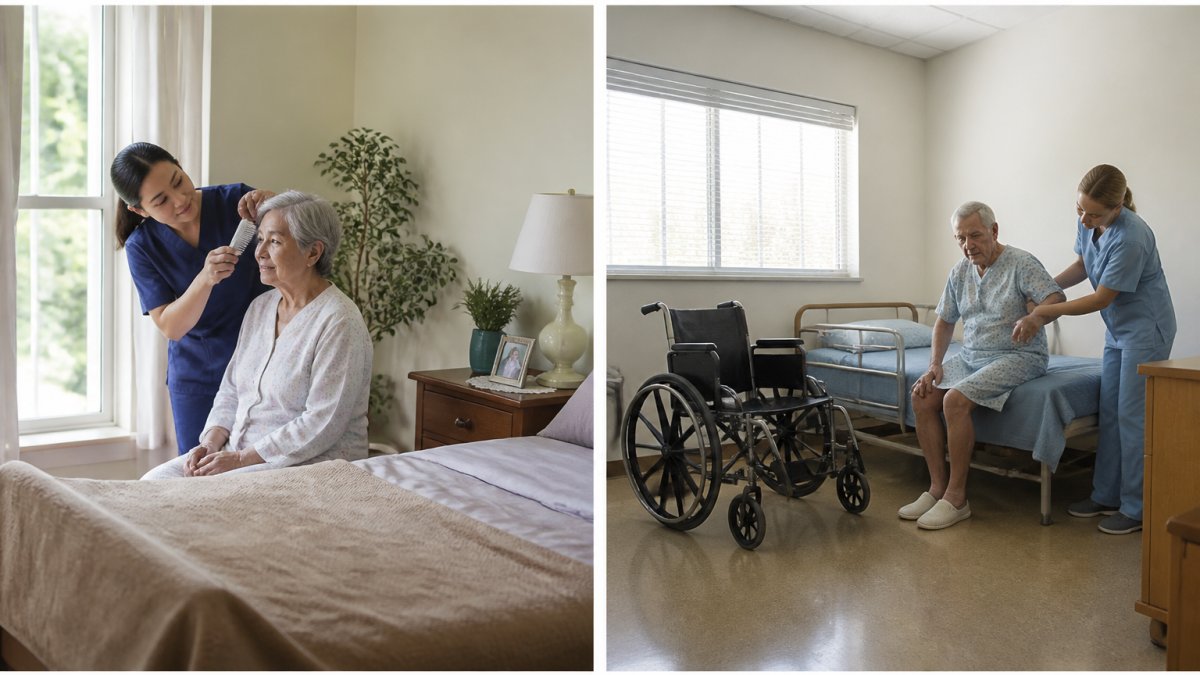
Residential facilities offer an alternative: 24-hour nursing care in a home-like environment with professional staff, medical oversight, and social engagement.
The choice depends on medical complexity, social needs, family capacity, and environmental preference.
Cost of 24-Hour Home Care and Payment Options
Understanding 24-hour home care costs is essential for planning. Pricing varies by location, medical complexity, setting (home or facility), and services included. Costs accumulate quickly with round-the-clock staffing.
Home-based 24-hour care requires hiring a live-in caregiver with recruitment, payroll, taxes, and screening. Residential facilities provide structured pricing including staff, facilities, meals, and activities in one monthly fee, depending on care level.
Payment options include private pay (out-of-pocket), long-term care insurance, Medicaid (in some states and settings), Veterans benefits for eligible seniors, and family contributions. According to the National Council on Aging's guide to senior care funding, many families use a combination of these resources to cover costs. (Source: Medicare.gov's guidelines on home health services)
Some families start with part-time care and transition to full-time support as needs increase. Discussing financial options early with a care advisor or elder law attorney helps with planning.
How to Assess Whether Your Parent Is Ready for 24-Hour Care
Deciding your parent is ready for 24-hour care for elderly support is deeply personal. Start by asking: Can your parent safely manage medications? Prepare meals? Remember to eat and drink?
Evaluate safety: Have there been falls or incidents? Does your parent wander or become confused? Are they at risk of leaving the stove on or forgetting to lock doors?
Consider social and emotional needs: Are they isolated? Expressing loneliness or depression? Would they benefit from structured activities and peer interaction?
Assess your own capacity: Can you provide or supervise care without sacrificing your health, employment, or relationships? Honest self-assessment about family caregiving limits is important.
| Assessment Area | Questions to Ask | Green Light for 24-Hour Care |
|---|---|---|
| Medical needs | Does your parent manage multiple medications? Do they have wounds, catheters, or equipment needing monitoring? | Yes to either question |
| Safety | Have there been falls, confusion, or risky behaviors? | Yes to any incident |
| Activities of daily living | Can your parent bathe, dress, toilet, and eat independently? | No to most questions |
| Cognitive status | Do they remember appointments, recognize family, understand time? | Significant confusion present |
| Social engagement | Are they isolated or expressing loneliness? | Yes, or resistant to interaction |
| Caregiver capacity | Can family provide or oversee care without burnout? | No, or already experiencing stress |
Hiring and Vetting a Caregiver: Concrete Steps
Once 24-hour care is necessary, finding and vetting the right caregiver is the next challenge. These steps reduce risk and ensure continuity.
Background Screening and Credentials
- Request a criminal background check completed within the past 12 months.
- Verify current CNA, HHA, or equivalent state certification through your state's health department.
- Call at least three previous employers or families. Ask: "How did this person handle emergencies? Were they reliable? Did they communicate well?"
- Confirm valid driver's license and current CPR/First Aid certification.
Medical and Care Knowledge
- Ask the caregiver to describe experience with your parent's specific conditions (diabetes, dementia, wound care). Request concrete examples.
- Clarify which tasks they're trained and willing to perform. Mismatch creates problems quickly.
- Ask about understanding of your parent's diagnoses and medications, including side effects to watch for.
Reliability and Communication
- Discuss backup coverage if the caregiver is sick or has an emergency.
- Establish communication protocols for daily updates and concern reporting.
- Clarify expectations about punctuality, appearance, and professional boundaries in writing.
- Ask how they handle conflicts with family members.
Insurance and Legal Protection
- If hiring independently, you're the employer responsible for payroll taxes, workers' compensation, and unemployment insurance (Topic no. 756, Employment taxes for household employees). Consult an accountant or elder law attorney.
- If using an agency, verify they carry liability insurance and workers' compensation.
- Clarify liability if your parent is injured or property is damaged.
Care Plans, Handoffs, and Continuity Across Shifts
When multiple caregivers rotate through your parent's home, information gaps create safety risks. Establish systems to ensure continuity.
Written Care Plan
- Work with a nurse to create a written care plan documenting medical conditions, medications, routines, preferences, and safety concerns.
- Include medication times/doses, mobility techniques, dementia communication strategies, dietary restrictions, and emergency contacts.
- Post visibly and provide to each caregiver. Update when conditions or medications change.
Shift Handoff Log
- Require caregivers to document daily observations: medications given, meals eaten, bathroom habits, mood changes, falls, and concerns.
- Incoming caregivers review the log before their shift. This catches missed information that might otherwise be overlooked.
Regular Check-ins with Family and Nursing
- Schedule weekly or bi-weekly calls with the primary caregiver to discuss status and emerging concerns.
- If nursing oversight is included, ensure the nurse reviews the care log and speaks with caregivers regularly.
- Family members should visit frequently to observe care directly, not just rely on reports.
Emergency Protocols
- Ensure every caregiver knows the emergency action plan in writing: when to call 911, contact you, or contact the physician.
- Practice scenarios during hiring and training.
- Confirm the caregiver has your phone number, physician contact, and access to advanced directives.
What to Expect: Daily Life and Services in 24-Hour Care
A typical day in 24 hour nursing care for elderly includes structured routines balancing medical oversight, personal care, meals, activities, and rest.
Mid-day includes meal preparation, medication reminders, and supervised activities or rest. Staff monitor for changes in behavior, appetite, or physical symptoms indicating emerging health concerns.
Afternoon includes meals, activities, and family visits. Evening brings dinner, personal care, and bed preparation.
Services typically included in 24-hour care for elderly residents encompass personal care, medication management, meal preparation, housekeeping, laundry, and supervision.
Choosing 24-hour nursing care for elderly family members is one of the most important decisions you'll make. At Ideal Care Homes Bellevue, we combine over 30 years of experience with personalized care plans, specialized memory care for dementia, and 24/7 nursing availability tailored to each resident's unique needs.
Frequently Asked Questions
What is the difference between 24-hour nursing care and live-in care for elderly?
24-hour nursing care means a licensed nurse or trained caregiver is present around the clock to provide medical oversight, medication management, and skilled care. Live-in care typically refers to a caregiver residing in the home but may not always involve nursing credentials. 24-hour nursing care is ideal for seniors with complex medical conditions, while live-in care suits those needing personal assistance and companionship. The choice depends on your parent's medical complexity and daily support needs.
At what stage of dementia do elderly patients typically need 24-hour care?
Most seniors with dementia transition to 24-hour care during the middle to late stages, when memory loss, behavioral changes, and confusion intensify. Early-stage dementia may require only part-time support, but as the disease progresses, supervision becomes critical to prevent wandering, falls, and medication errors. Each person's timeline differs based on overall health and family support capacity. A professional assessment can clarify your parent's specific needs.
Does Medicare cover 24-hour nursing care at home?
Medicare Part A covers skilled nursing care at home only when medically necessary and ordered by a doctor following a hospital stay, typically for short-term recovery, not ongoing 24-hour care. For long-term round-the-clock support, Medicare generally does not pay. Medicaid may cover some in-home care depending on your state and your parent's income and assets. Veterans may qualify for additional benefits through the VA. Contact your parent's insurance provider or a social worker to explore all coverage options.
What daily tasks and services does a 24-hour caregiver provide?
A 24-hour caregiver assists with activities of daily living such as bathing, dressing, grooming, toileting, and meal preparation. They provide mobility assistance, help with transfers, remind about medications, monitor vital signs, and offer companionship. In a nursing care setting, they also manage wound care, catheter care, and coordinate with doctors. They ensure safety, respond to emergencies, and help maintain the senior's independence and dignity throughout the day and night.
How can I tell if my parent is ready for 24-hour care instead of staying at home alone?
Warning signs include frequent falls, confusion about medication, difficulty with personal hygiene, inability to prepare meals safely, wandering behavior, or behavioral changes. If your parent has multiple chronic conditions, recent hospitalizations, or cognitive decline, 24-hour supervision becomes essential. If you or other family caregivers are exhausted or cannot provide adequate oversight, professional 24-hour care protects both your parent and your own wellbeing. A healthcare provider can help assess readiness during a formal evaluation.
What makes a smaller, home-like 24-hour care setting different from a large facility?
Smaller, family-owned homes typically offer personalized care plans, continuity with the same caregivers and nurses, and a warmer, less institutional environment. Residents often receive more individualized attention and maintain stronger connections with staff. These settings can be especially beneficial for seniors with dementia who thrive in calm, familiar surroundings. Larger facilities may offer more amenities and activities but sometimes have higher staff turnover and less personalized interaction. The best choice depends on your parent's personality, medical needs, and preference for environment.