 listicle
Daily Activities for Memory Care Residents
Table of Contents
- Why Daily Activities Matter for Memory Care Residents
- Building a Daily Routine for Dementia Patients
- Sensory Activities for Dementia That Engage the Senses
- Cognitive Stimulation: Puzzles, Games, and Brain Activities
- Group Activities for Memory Care Residents
- Calming Activities for Dementia Patients
- Creative Expression and Reminiscence
- Purposeful Household Tasks and Movement
- Frequently Asked Questions
Last Updated: October 19, 2026
Why Daily Activities Matter for Memory Care Residents
Daily activities for memory care residents do far more than fill time. They preserve dignity, maintain cognitive function, and create moments of genuine connection.
The brain doesn't stop needing stimulation when memory fades. Meaningful activities, whether singing, sorting objects, or playing cards, activate neural pathways and provide a sense of purpose. For people with dementia or Alzheimer's disease, this engagement can slow cognitive decline and improve quality of life significantly.
What makes this approach work is personalization. A one-size-fits-all activity schedule fails most residents. The goal is matching activities to each person's abilities, preferences, and remaining strengths. That's why we focus on understanding each resident's history, interests, and current capacity before designing their daily routine.
Building a Daily Routine for Dementia Patients
A structured daily routine for dementia patients creates predictability and security. People with memory loss often feel anxious when the day is unplanned. They don't know what comes next, which can trigger agitation or withdrawal. A consistent schedule, by contrast, reduces confusion and gives residents something stable to hold onto.
The routine should balance stimulation with rest. Morning activities might involve cognitive engagement or creative tasks. Afternoons often work better for gentler, more social activities. Evenings call for calming pursuits that prepare residents for sleep. The key is avoiding overscheduling, residents need downtime, not back-to-back programming.
Sample Daily Schedule for Memory Care
Here's a practical framework that works well for many residents. It is built around three anchors that most memory care communities use: meals at consistent times, one period of active engagement in the morning when energy and attention tend to be highest, and a calming wind-down before sundowning typically begins in the late afternoon.
| Time | Activity Type | Example Activity | Duration | Why It Fits |
|---|---|---|---|---|
| 7:30-8:30 AM | Morning routine & breakfast | Assisted grooming, nutritious meal | 60 minutes | Predictable start; hunger and blood sugar affect mood all day |
| 9:00-9:45 AM | Cognitive stimulation | Large-print word search, simple jigsaw, reminiscence cards | 45 minutes | Attention is often strongest mid-morning |
| 10:00-10:45 AM | Physical movement | Seated stretching, hallway walking, raised-bed gardening | 45 minutes | Movement before lunch supports appetite and sleep |
| 11:00 AM-12:00 PM | Household task or purposeful work | Folding towels, sorting silverware, setting tables | 60 minutes | Taps long-term procedural memory; builds a sense of contribution |
| 12:00-1:00 PM | Lunch & social time | Shared meal with caregivers or residents | 60 minutes | Group meals often improve intake and reduce isolation |
| 1:00-2:00 PM | Rest or quiet time | Listening to favorite music, reclining rest | 60 minutes | Post-lunch dip is real; forcing activity here backfires |
| 2:00-3:00 PM | Sensory or creative activity | Sing-along, watercolor painting, hand massage | 60 minutes | Gentle engagement without demanding sustained attention |
| 3:00-4:00 PM | Social group activity | Small-group bingo, card games, coffee circle | 60 minutes | Small groups of 4-6 work better than large crowds |
| 4:00-5:00 PM | Calming activity before sundowning | Soft music, photo albums, quiet conversation | 60 minutes | Pre-empts late-afternoon agitation |
| 5:30-6:30 PM | Dinner & evening routine | Meal preparation participation, dinner | 60 minutes | Familiar routine signals the day is winding down |
| 7:00-8:00 PM | Wind-down | Gentle music, hand massage, familiar scents | 60 minutes | Low light and low stimulation prepare for sleep |
This schedule is a template, not a prescription. Some residents thrive on more activity; others need longer rest periods. The point is creating a rhythm that residents can anticipate and rely on.
How to Build the Routine Around the Resident
Start with the person's life history, not the activity catalog. A retired teacher may light up sorting books or reading aloud to a small group; a former mechanic may prefer sorting hardware or polishing tools. Ask family members for the person's job, hobbies, faith practices, and daily habits from 20 or 30 years ago. Long-term memory is usually the strongest remaining resource.
Then layer in these practical rules:
- Anchor the day with meals and rest. Meals, medication times, and rest periods are non-negotiable anchors. Build activities in the gaps rather than squeezing meals around activities.
- Front-load demanding activities. Most residents have the best attention and patience in the morning. Schedule cognitive and creative tasks before lunch.
- Protect the late afternoon. Sundowning is common between roughly 4:00 and 7:00 PM. Reduce noise, dim harsh lighting, and switch to calming activities before agitation starts.
- Keep transitions short and announced. Give a five-minute warning before switching activities. Sudden changes are a common trigger for resistance.
- Build in downtime. Two or three rest blocks per day are normal. A resident who is dozing in a chair after lunch is not failing the schedule.
- Repeat the same activities at the same times. Novelty is not the goal. Repetition is what creates the sense of security that makes the routine work.
Adjusting the Routine When It Stops Working
A routine that worked in month one may stop working in month six as dementia progresses. Watch for these signals that the schedule needs to change:
- Increased resistance at a specific time block. If a resident consistently refuses the 10:00 AM walk, the activity may now be too demanding or poorly timed. Move it, shorten it, or swap it for a seated alternative.
- New agitation during transitions. This often means the pace is too fast or the resident needs a longer warning before changes.
- Sleep disruption. If the resident is awake and restless at night, look at the afternoon and evening blocks first. Late naps and stimulating evening activities are common culprits.
- Withdrawal from group activities. A resident who previously enjoyed bingo but now sits apart may need a smaller group or a one-to-one version of the same activity.
Adjust one variable at a time and give the change a week before judging it. Caregivers who change three things at once cannot tell what worked.
Sensory Activities for Dementia That Engage the Senses
Sensory activities for dementia bypass language and memory loss to create direct emotional connection. When words fail, the senses still work.
Music and movement are powerful sensory tools. Singing familiar songs from a resident's era, playing their favorite music, or dancing to rhythms they recognize activates memory and emotion simultaneously.
Tactile experiences matter equally. Folding soft towels, watering plants, holding a pet, or touching textured fabrics engages the hands and creates calm. These activities don't require memory or language, just presence and sensation.
Hand massage, warm blankets, and water play are other sensory approaches. Even residents with advanced dementia often relax during a gentle hand massage or when holding warm water in a bowl. These simple acts communicate care without words.
Cognitive Stimulation: Puzzles, Games, and Brain Activities
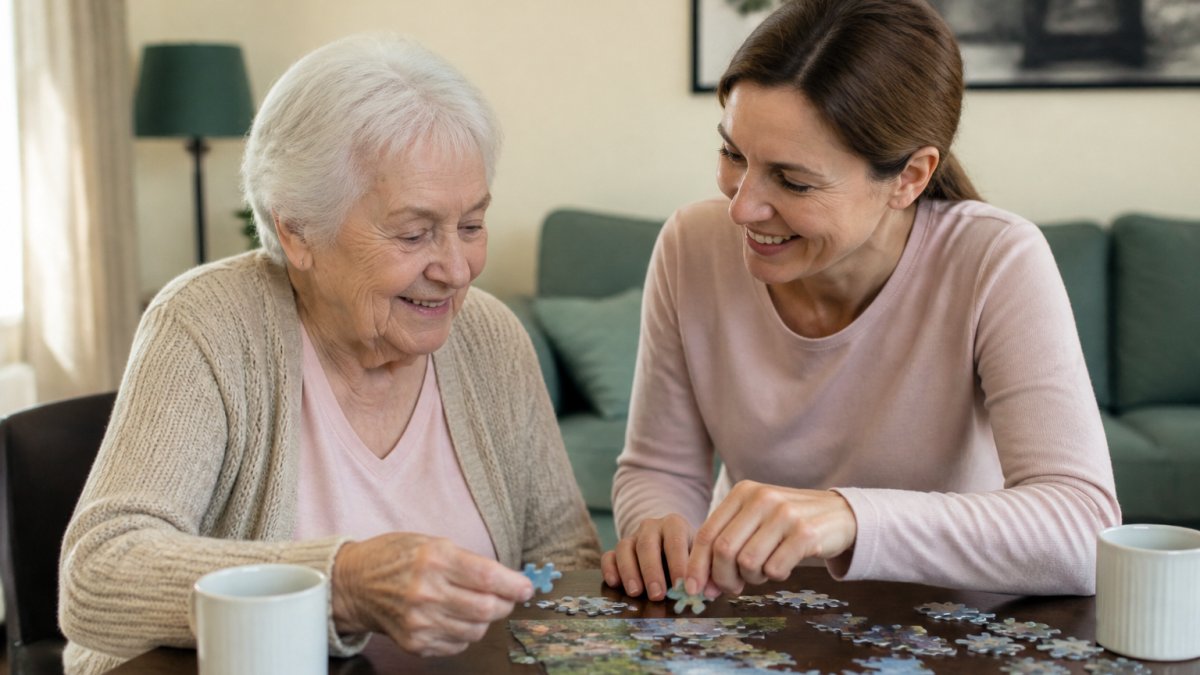
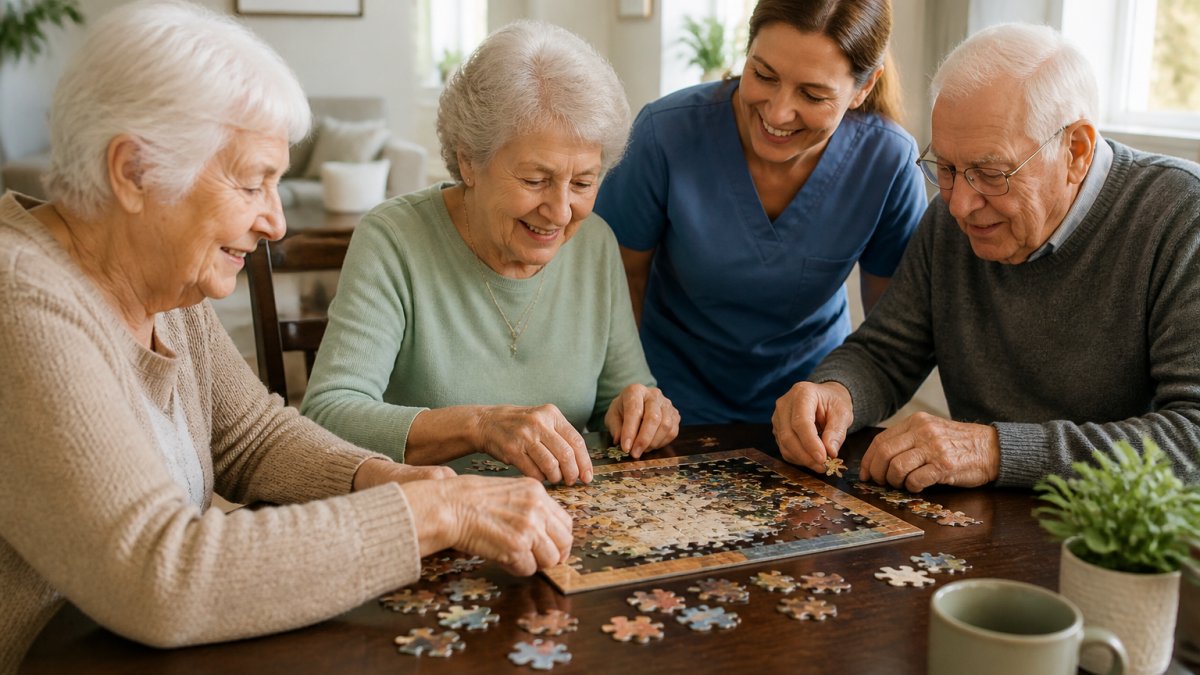
Cognitive stimulation keeps the mind engaged without overwhelming it. The goal isn't winning or perfection, it's participation and enjoyment. Puzzles, word games, bingo, and card games all work, depending on the resident's stage and ability.
Large-print word searches, simple jigsaw puzzles, and bingo are accessible for many residents. Card games like Go Fish or Crazy Eights don't require complex strategy but keep attention focused. Trivia about familiar topics, old movies, music, sports, can spark conversation and engagement.
The key is matching difficulty to ability. A puzzle with 500 pieces frustrates someone with mid-stage dementia. Always choose activities that allow residents to feel competent, even if they need help. (Source: National Institute on Aging's research on cognitive health)
Group Activities for Memory Care Residents
Group activities for memory care residents foster social connection and reduce isolation. Even residents with significant memory loss benefit from the presence of others and the structure of shared time.
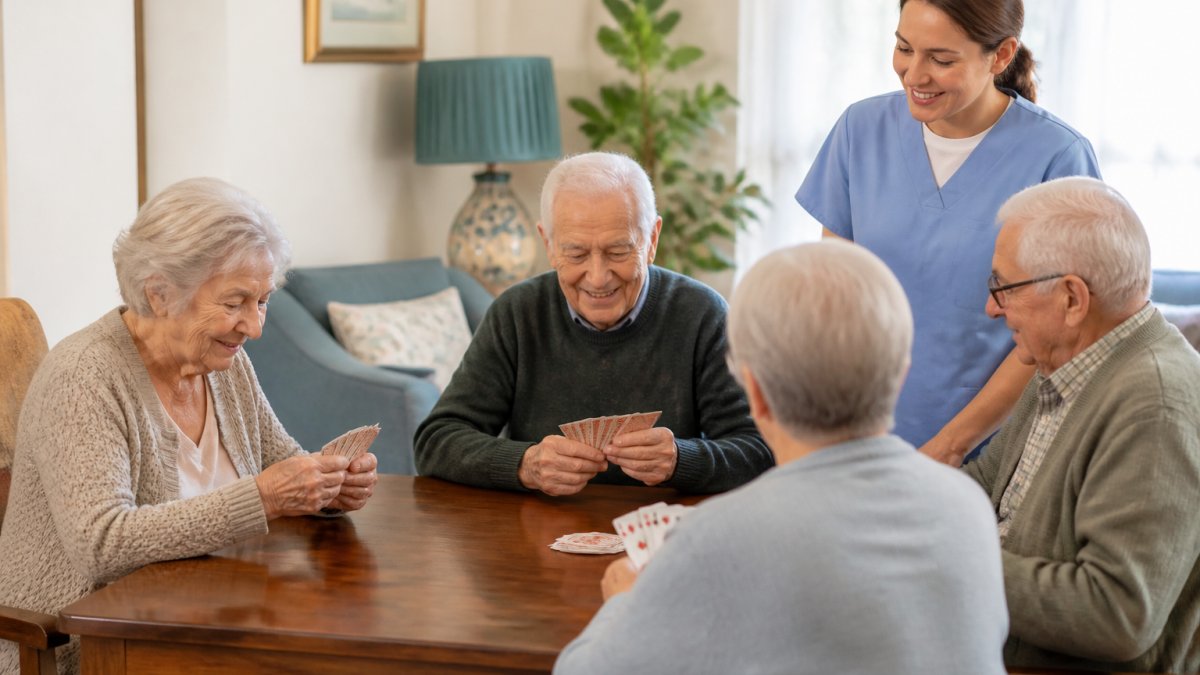
Card games, bingo, and board games work well in small groups of 4-6 residents. These activities provide entertainment, gentle competition, and conversation.
Group sing-alongs, movie viewings, and craft circles also build community. The activity itself matters less than the togetherness.
Group size matters. Larger groups overwhelm many residents with dementia. A small circle of familiar faces feels safe; a crowded room feels chaotic.
Calming Activities for Dementia Patients
Calming activities for dementia patients reduce anxiety and prepare the mind for rest. These are especially important in late afternoon and evening when many residents experience "sundowning", increased agitation, confusion, or restlessness as daylight fades.
Gentle music, soft lighting, and quiet conversation create a soothing environment. Some residents respond beautifully to guided relaxation or simple meditation.
Rhythmic activities, rocking, swaying, gentle hand movements, have a naturally calming effect. Warm beverages, soft blankets, and familiar scents all contribute to relaxation. The goal is signaling to the nervous system that it's safe to slow down.
Avoid stimulating activities in the evening. High-energy games, loud music, or new activities can trigger agitation. Stick to predictable, gentle pursuits that residents have done before and found comforting.
Creative Expression and Reminiscence
Creative expression and reminiscence activities tap into long-term memory and emotional connection. Many residents retain vivid memories of their youth, favorite songs, and important life events even when recent memory fades.
Reminiscence activities use photos, music, or familiar objects to spark conversation and connection.
Arts and crafts, painting, drawing, collage, or simple crafts, allow creative expression without judgment. The process matters more than the product. A resident might paint abstract colors or create a simple collage.
Storytelling circles, where residents share memories or listen to others' stories, build connection and meaning. Even residents with significant memory loss often enjoy hearing stories, and the familiar voices and faces of caregivers and other residents provide comfort.
Purposeful Household Tasks and Movement
Purposeful household tasks give residents meaningful work and maintain independence. Many people find identity and satisfaction in contributing to household functioning, even in small ways.
Folding towels, setting the table, sorting objects, watering plants, and helping with meal preparation are all appropriate tasks depending on ability.
Gentle physical exercise, walking, stretching, tai chi-like movements, keeps residents mobile and reduces stiffness. Even residents in wheelchairs can do seated stretches or arm movements.
Gardening activities, watering plants, touching soil, smelling flowers, combine physical movement, sensory engagement, and purposeful work.
The goal is keeping residents active, engaged, and feeling useful. When people with dementia contribute meaningfully to their environment, they maintain dignity and purpose.
Engaging residents meaningfully every day is one of the most important aspects of memory care. At Ideal Care Homes Bellevue, we build personalized daily routines that match each resident's abilities, interests, and stage of dementia.
Frequently Asked Questions
What are some fun activities for memory care residents?
Fun activities for memory care residents include card games, bingo, singing familiar songs, looking through old family photos, gardening or watering plants, simple arts and crafts, folding towels, setting the table, listening to favorite music, and group meals. The best activities tap into long-term memories, involve the senses, and allow residents to participate at their own pace. What works varies by individual preference and dementia stage, so observing what engages each resident helps caregivers choose activities that bring genuine enjoyment.
How can you adapt activities for different stages of dementia?
Early-stage dementia residents may enjoy more complex activities like puzzles, trivia, or detailed craft projects. Middle-stage residents do better with simpler, more hands-on tasks like sorting objects, folding items, or listening to music. Advanced dementia residents benefit from sensory activities like gentle massage, listening to familiar songs, looking at family photos, or simply sitting together. Always break tasks into small steps, use simple instructions, offer one-on-one support when needed, and allow extra time for responses. Watch for signs of frustration and adjust or pause the activity if the resident becomes agitated.
What is the 90 second rule for dementia patients?
The 90-second rule suggests that when a memory care resident becomes upset or agitated, caregivers should pause, remain calm, and wait approximately 90 seconds before responding or redirecting. This brief pause allows the emotional response to naturally settle and gives the caregiver time to respond thoughtfully rather than reactively. After the initial moment passes, gently redirect the resident to a calming activity, familiar object, or comforting presence. This approach reduces escalation and helps create a more peaceful environment for both the resident and caregiving staff.
How long should activities last for someone with dementia?
Most activities for memory care residents should last 15 to 45 minutes, depending on the individual's attention span, energy level, and dementia stage. Early-stage residents may engage for longer periods, while those in advanced stages often do better with shorter, 10 to 20-minute sessions. Watch for signs of fatigue, restlessness, or loss of interest and end the activity before frustration sets in. Shorter, frequent activities throughout the day are often more effective than one long session. Always allow flexibility and follow the resident's lead on when they are ready to stop.