 blog
blog
Questions to Ask Memory Care Directors
Table of Contents
- What to Ask About Staff Training and Dementia Care Experience
- Understanding Staffing Levels and 24/7 Supervision
- Memory Care Tour Checklist: Safety and Wandering Prevention
- Care Plans, Medical Management, and Family Communication
- Memory Care Safety Questions You Should Ask
- Memory Care Costs and Fees: What's Included and What Isn't
- Daily Activities, Engagement, and Quality of Life
- Verifying Answers and Making Your Final Decision
- Frequently Asked Questions
Last Updated: October 16, 2026
What to Ask About Staff Training and Dementia Care Experience
Staff expertise is everything in memory care: your parent's safety and quality of life depend on memory care directors and caregivers who understand dementia.
Ask about formal dementia training: how many hours of specialized education does each staff member complete annually, and does it cover Alzheimer's progression, communication, and de-escalation?
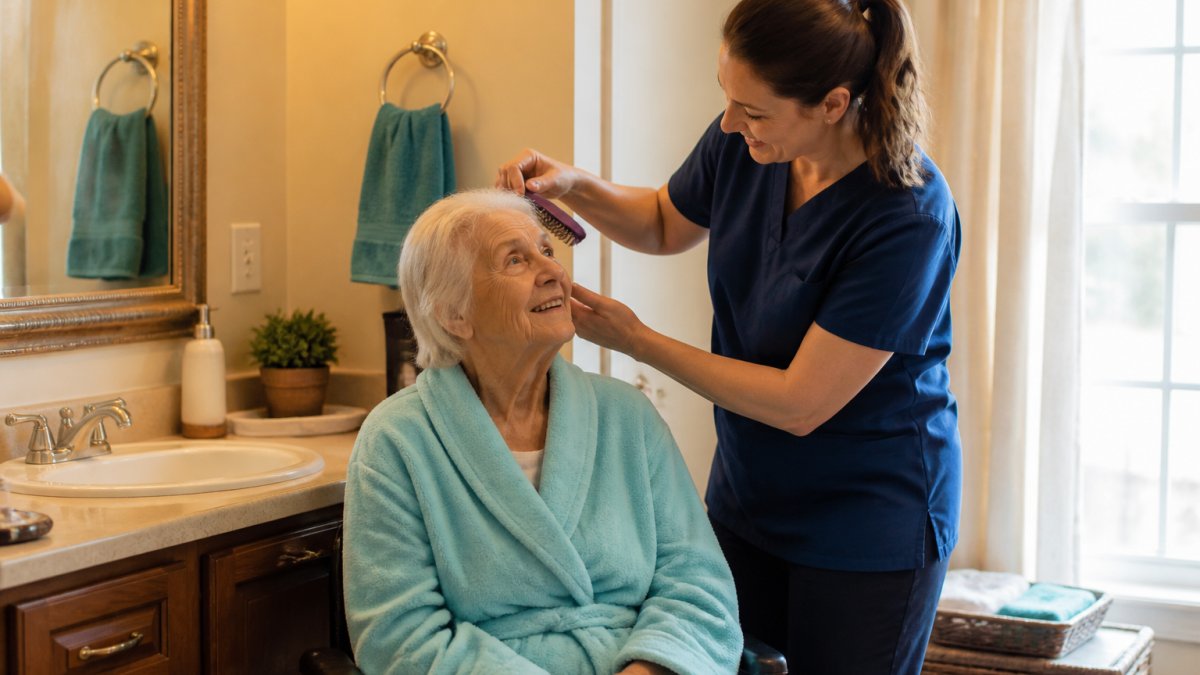
Ask how long primary caregivers have worked in memory care and whether they've cared for residents at your parent's stage of decline. Five years of dementia-specific experience means spotting subtle behavioral changes a generalist would miss.
Ask memory care directors who oversees medical decisions and whether a licensed nurse is on-site 24/7 or part-time. At Ideal Care Homes Bellevue, we offer 24/7 nursing care and availability because medical needs don't follow business hours.
Ask what happens when a resident exhibits challenging behaviors: is there a protocol, who implements it, and can they walk you through a real sundowning or wandering example?
Understanding Staffing Levels and 24/7 Supervision
Staffing levels directly impact your parent's safety and attention, beautiful common areas mean little without enough hands on deck.
Ask about the staff-to-resident ratio on day and night shifts. Many facilities staff differently at night, when wandering and falls often happen; a good community maintains consistent ratios around the clock.
Ask the question most families don't: what's your actual turnover rate? Familiar caregivers notice subtle changes and provide comfort through consistency, so ask how long the average caregiver stays and what they do to retain staff.
Request a breakdown of who's on-site during each shift: is there always a nurse, and is supervision truly 24/7? The difference between "staff present" and "trained supervision at all times" is critical.
During your tour, observe the staff: do they interact warmly with residents, seem rushed or relaxed, and are residents engaged rather than sitting passively in front of a television?
Memory Care Tour Checklist: Safety and Wandering Prevention
Safety is non-negotiable in memory care. Residents may wander or forget where they are, so your tour should focus on how the facility prevents accidents and manages wandering.
Look for secure areas: are exits monitored, and can residents leave without staff knowing? Ask about door alarms, keypad locks, and monitored exits.
Examine the physical environment: fall hazards, lighting, non-slip flooring, handrails, and bathroom grab bars. A well-designed memory care space reduces accidents before they happen.
Ask about emergency procedures: what happens during a medical emergency, how quickly paramedics can access the building, and whether there's a backup plan if the primary caregiver is unavailable.
During your tour, check whether the facility feels secure but not restrictive: outdoor space with proper supervision, clear pathways, good lighting, and staff positioned to notice problems.
Care Plans, Medical Management, and Family Communication
Every resident needs an individualized care plan tailored to their needs, preferences, and stage of dementia, reviewed regularly and updated as their condition changes.
Ask how often care plans are reviewed, a good facility does so at least quarterly, or immediately when needs change, and whether you'll be involved. You know your parent better than anyone; your input should shape their care.
Understand the medical care: does the facility coordinate with your parent's primary care physician, how are medical changes communicated, and who oversees medication management and error prevention?
Ask about specialist coordination: who arranges cardiologist or neurologist visits, does the facility transport residents, and how are medical updates communicated back to the care team?
Ask about family communication: how often will staff contact you, and will they reach out proactively about changes or only when there's a problem?
Ask how the facility respects your parent's right to refuse care or activities while ensuring safety, memory care residents still have dignity and autonomy.
Memory Care Safety Questions You Should Ask
Beyond the basics, dig into specific safety practices. These questions reveal whether the facility has thought through real-world scenarios, and whether you can verify the answers.
Medication safety. Ask who administers medications, their licensure, and whether a pharmacist reviews the full medication list on a set schedule. Ask about the double-check or barcode system at administration and what happens when a dose is missed or an error is caught.
Infection control. Ask how they prevent illness among vulnerable older adults, their outbreak protocol, how exposure is communicated to families, and how hand hygiene and PPE compliance are monitored.
Abuse and neglect prevention. Ask how staff are screened before hire, what ongoing training covers, and the reporting process if abuse or neglect is suspected. Federal law requires nursing facilities to report suspected abuse to the state survey agency, and many states extend similar duties to assisted living and memory care.
Resident rights and grievance procedures. Ask for the resident rights statement and grievance policy: how does a resident or family member file a complaint, what's the response timeline, and is there a resident or family council?
Regulatory history and inspection records. Ask directly: "Can you walk me through your last inspection and any deficiencies?" Then verify.
Emergency preparedness. Ask what happens during a power outage, fire, or severe weather: is there a generator, how are residents who can't self-evacuate moved, and how are families notified? Ask to see the emergency plan and last drill log.
Find your state's long-term care ombudsman and licensing agency
Memory Care Costs and Fees: What's Included and What Isn't
Memory care costs vary widely by market, unit type, and level of care, and the base monthly rate rarely tells you what you'll actually pay.
Ask about care-level or tier pricing. Many communities charge a base rate plus tiered add-ons as needs increase.
Ask about rate increases. How often has the base rate risen in the past three years, by what percentage, and how much advance notice do residents get? Is the increase tied to a published index or set at the community's discretion?
Ask about the deposit and refund policy. How much is the deposit or entrance fee? Is it refundable, prorated, or forfeited? What's the refund timeline after move-out or death?
Ask about discharge and move-out terms. Under what circumstances can the community ask a resident to leave? Federal law requires nursing facilities to give written notice and a discharge plan before transfer or discharge; ask whether the memory care community follows a comparable practice even under state assisted living rules.
Ask how costs are communicated. Will you receive an itemized monthly statement? Who do you call with a billing question, and what's the response time? Can you see a sample statement with resident identifiers redacted?
Talk to current families about money. Request at least three references and ask: were there unexpected charges, how were rate increases communicated, and how quickly did the community respond to billing questions? Their answers tell you more than the marketing packet.
Compare nursing home and assisted living costs by state
Daily Activities, Engagement, and Quality of Life
Memory care isn't just safety and medical management, it's your parent's quality of life. Ask about daily activities and cognitive engagement.
What activities does the facility offer, therapeutic dementia-specific programming, art, music, reminiscence therapy, outdoor time, social engagement? Ask for a sample weekly schedule and observe an actual activity during your tour.
Ask how activities are tailored to individual interests and abilities. Does the facility learn what your parent enjoyed before dementia? A former gardener might benefit from a sensory garden; a pianist from music therapy.
Ask about cognitive stimulation: as dementia progresses, engagement becomes harder. How do they keep residents mentally active and adapt activities as residents decline?
Ask about social connection: does the facility facilitate friendships among residents, invite families to activities, and help residents maintain outside relationships?
Ask about dining and nutrition: are meals tailored to preferences, can they accommodate dietary restrictions, and is mealtime social rather than a functional task? Nutrition matters enormously for health and dignity.
Verifying Answers and Making Your Final Decision
Everything you're told should be verifiable. Don't just take the facility's word, observe, ask for documentation, and follow up with references.
During your tour, watch how staff interact with residents: are they kind and patient, do they speak with respect rather than condescension, and do residents seem content or withdrawn?
Ask to speak with current residents' families.
Review the facility's state inspection reports and complaint history, public records. Look for patterns: a single minor violation might be nothing, but repeated violations suggest systemic problems.
Ask about the facility's philosophy and values: do they align with yours? If your parent's dignity and independence matter most, does the facility prioritize that?
Visit multiple times, different times of day, different days of the week. A facility might be spotless and staffed on a Tuesday morning but chaotic on a Friday afternoon.
Trust your instincts. If something feels off, it probably is.
Choosing the right memory care community means finding a place where your parent receives expert dementia care, maintains dignity, and enjoys the best possible quality of life. Our family-owned approach means your parent is known as an individual, not a room number. Schedule your tour today and see firsthand how our team combines professional care with the warmth of a home.
Frequently Asked Questions
What should I ask a memory care director during a tour?
Start with staff credentials and dementia training, then ask about staffing ratios, 24/7 supervision, and how care plans are created and reviewed. Move to safety measures, including wandering prevention and secure areas. Ask about daily activities, dining support, medication management, and how the community communicates with families. Finally, clarify all costs, what's included, and what triggers additional fees. Observe the environment and staff interactions, and request references from current families.
How can I evaluate staffing and caregiver training in memory care?
Ask the director about caregiver certifications, dementia-specific training hours, and ongoing professional development. Request the staff-to-resident ratio for each shift and ask how turnover is managed, high turnover disrupts continuity of care. Ask which staff members work regularly with your family member and whether the same caregivers are assigned consistently. Inquire about the medical director's credentials and availability. During your tour, observe how staff interact with residents: do they speak respectfully, engage residents, and respond promptly to needs?
What safety measures should I ask about in a memory care community?
Ask about secure units or areas designed to prevent wandering, door alarms, and monitoring systems. Inquire about emergency procedures, including fire drills and medical emergencies, and confirm the community's access to emergency medical services. Ask how behavioral changes or behavioral crises are managed and whether the staff have training in de-escalation. Ask about medication security and how medications are tracked. Request details on how the community prevents falls, manages nutrition for residents with swallowing difficulties, and handles end-of-life care preferences.
What costs or additional fees should I ask about in memory care?
Ask for a complete breakdown of the monthly base fee and what services it includes: meals, activities, personal care, laundry, and housekeeping. Ask whether there are additional charges for medication management, specialized therapies, incontinence supplies, or higher levels of care as residents decline. Clarify the contract terms, including notice periods, deposit requirements, and refund policies. Ask whether costs increase with behavioral changes or medical complexity. Request this information in writing so you can compare communities accurately and budget for long-term care.